The Fault Lines of Faith: The Heros and Villains of the Protestant Reformation

On October 31, 1517, an Augustinian monk named Martin Luther walked to the Castle Church in Wittenberg, Germany, and nailed a document to its wooden doors. While history remembers this moment as the sudden explosion of the Protestant Reformation, the truth is far more complex. The hammer blows of Luther’s 95 Theses were not the start of a new argument, […]

Read more
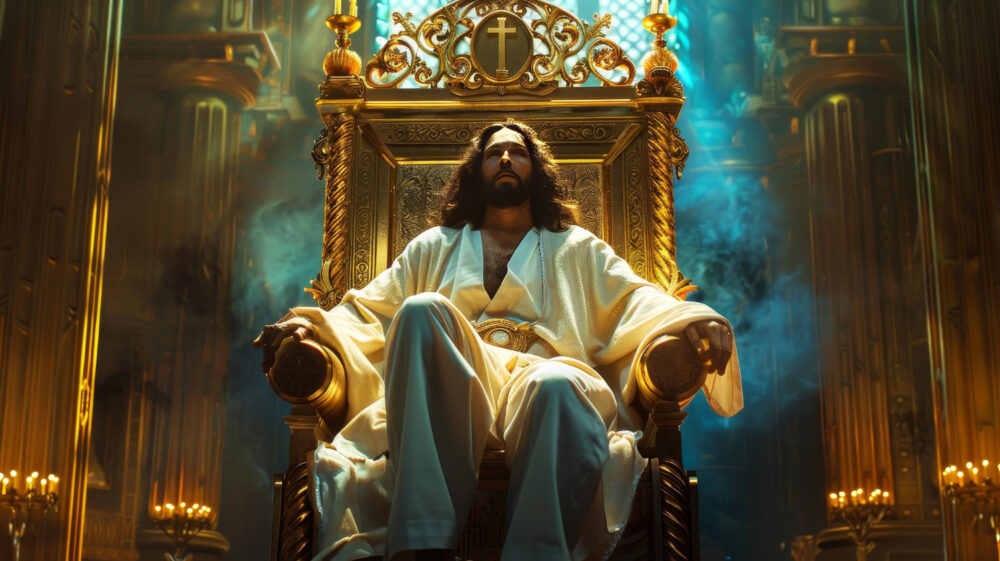

Did Jesus Aim to Start a New Religion?

From a Jewish Messianic Movement to Imperial Christianity One of the most enduring questions about Christianity is whether Jesus of Nazareth intended to found a new religion. Today, Christianity is often seen as a distinct global faith, separate from Judaism. Yet the historical origins of the movement reveal a far more complex story. Jesus lived and taught entirely within first-century […]

Read more

The Evolution of Syncretism in Church Tradition

Syncretism, the blending of different religious practices and beliefs, has been a part of the Christian Church’s history from its earliest days. As Christianity spread throughout the world, it encountered various cultures and religions, leading to a natural fusion of traditions. Early Christianity (1st-3rd centuries) The apostles and early Church Fathers faced the challenge of presenting Christianity to diverse audiences. […]

Read more

Definition(s) of Hell

We eagerly cling to the cross of Jesus for salvation, forgiveness, and healing, yet often overlook the daily cross He commands us to bear. We hastily condemn others to eternal damnation, deciding who deserves God’s mercy. But does salvation only mean escaping Hell? Who appointed us judge, jury, and executioner of others’ eternal destinies? And if God were to spare […]

Read more

The Keys to the Kingdom

Unpacking Biblical Authority The concept of the “keys of the kingdom” is a fundamental Christian doctrine, often associated with eternal church authority. However, its interpretation and application have been debated throughout history. Biblical Origins Jesus introduced the concept of the keys in Matthew 16:19 and 18:18, granting authority to His disciples to “loose and bind” things on earth, echoing in […]

Read more

Render unto Caesar – Tax or not to Tax?

Rethinking Jesus’ Teaching on Taxes For centuries, Christians have interpreted Jesus’ response in Matthew 22:21, “Render unto Caesar the things that are Caesar’s, and unto God the things that are God’s” (AMP), as an endorsement of paying taxes. However, this interpretation overlooks the historical context and Jesus’ subtle yet powerful message. In 6 AD, Rome imposed a census tax on […]

Read more

The Hebrew/Aramaic New Testament

Uncovering the Hidden Sources of the Canonical Gospels The canonical Gospels, composed in Greek, reveal hints of non-Greek origins. Jesus’ teachings, likely delivered in Hebrew/Aramaic, influenced the earliest records of his life, written in the same languages. A clue to this heritage lies in the numerous foreign words transliterated into Greek from Hebrew or Aramaic. Modern translations often conceal these […]

Read more

What happened at Laodicea & Nicaea?

Two pivotal councils in the early Christian Church played a significant role in shaping its doctrine, practices, and organizational structure. The Council of Nicaea (325 AD) and the Council of Laodicea (363-364 AD) addressed various issues, from Christological debates to liturgical practices, leaving an enduring impact on the Church. The Council of Nicaea Held in Nicaea, Turkey, this ecumenical council […]

Read more

Easter Controversy

The Evolution of Passover to Easter: A Historical Analysis The celebration of Easter has its roots in the biblical Passover, but over time, it has evolved into a distinct holiday with its own customs and traditions. This article explores the history of how Passover became Easter, and the implications for Christians today. Origins of Passover Passover, also known as Pesach, […]

Read more