
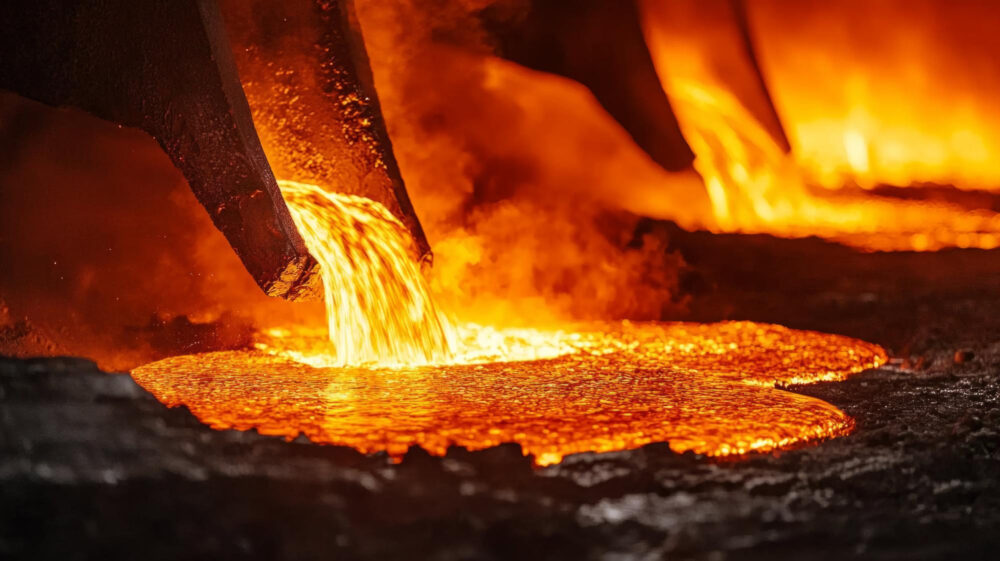
Few phrases in the Bible evoke stronger imagery than “fire and brimstone.” In popular imagination, especially during Medieval times, it has become synonymous with divine torture and endless punishment. Yet a closer examination of the language and symbolism used in Scripture reveals a more complex picture. When the original Greek terms, ancient cultural context, and biblical symbolism of fire are considered together, the Lake of Fire described in the Book of Revelation can be understood not merely as a place of torment, but potentially as a refining encounter with the presence of God.
The key phrase “fire and brimstone” appears in passages such as Revelation 20:14, Revelation 20:15, and Revelation 21:8. The word translated “brimstone” comes from the Greek term theion, commonly understood as sulphur. However, the word is linguistically related to theios, meaning “divine,” and to theos, the Greek word for God. Because of this connection, the term carries the sense of something associated with the divine realm, not merely a burning chemical.
In the ancient world sulphur was widely used for purification rituals. It was burned to cleanse temples, homes, and sacred spaces believed to be contaminated. The Greek poet Homer, for example, described sulphur being burned to purify a house after bloodshed. In that cultural context, sulphur smoke was not primarily associated with torture but with cleansing and restoration. When Revelation describes “fire and brimstone,” it may therefore be drawing on imagery of divine purification.
This interpretation also fits a broader biblical pattern in which fire represents refinement rather than mere destruction. In Malachi 3:2–3, God is described as a refiner’s fire purifying precious metals. Likewise, 1 Corinthians 3:13–15 speaks of a fire that tests each person’s work, burning away what is false while preserving what endures. These passages portray divine fire as something that reveals and purifies, much like a crucible used to refine gold or silver.
Another linguistic detail strengthens this interpretation. The Greek word often translated “torment” in Revelation is basanizo, derived from basanos. Originally, a basanos was a touchstone, a dark stone used in the ancient world to test the purity of gold. By rubbing gold against the stone, its authenticity could be revealed. Over time the word came to mean testing or examination, and eventually severe distress. Yet its original meaning points to a process of proving authenticity, much like testing precious metals.
An important detail appears in Revelation 14:10, which says that this fiery judgment occurs “in the presence of the holy angels and in the presence of the Lamb.” The Lamb refers to Jesus Christ. Rather than describing a place separated from God, the text situates the fire directly within the presence of Christ. This suggests that the fire may represent the overwhelming reality of divine holiness itself.
Throughout the Bible, God’s presence is often depicted as fire. Hebrews 12:29 declares that “our God is a consuming fire,” while Exodus 3:2 portrays God appearing to Moses in a burning bush. In these images, fire symbolises the intensity and purity of God’s nature—something that illuminates and purifies, but also consumes whatever cannot endure it.
Seen through this lens, the Lake of Fire may symbolise a kind of divine crucible—an encounter with the holiness of God so intense that it consumes evil and burns away corruption. Instead of representing cruelty, the imagery points toward the ultimate triumph of truth and purity in the presence of God.
While interpretations of the final judgment differ across Christian traditions, this perspective highlights an important biblical theme: that God’s fire is not merely destructive but refining, purifying creation until only what is true and good remains. 🔥
Comparison of the Divine Realms
| Feature | Sheol / Hades / Gehenna | The Lake of Fire |
|---|---|---|
| Purpose | Correction & Containment: A temporary “waiting room” or symbolic refuse pile for sorting the dead. | Total Refinement: The final “melting point” where evil is purged to make way for a new creation. |
| Nature | Historical/Symbolic: Earthly imagery (the grave or a burning valley) used to describe spiritual separation. | Divine Essence: A spiritual environment of Divine Sulphur (Theion) acting as a solvent on spirits. |
| Origin | Earthly/Temporal: Linked to the fall of man and the physical death of the 3D body. | Transcendental: Specifically prepared for the Devil and his angels (Matt 25:41). |
| Duration | Age-Bound: These realms are emptied during resurrection and abolished (Rev 20:13–14). | Finality: Defined as the “Second Death”; the final state of the current cosmic order. |
| Inhabitants | The Dead: Human souls awaiting resurrection and final judgment. | The Source of Evil: Satan, the Beast, the False Prophet, and the very nature of Death itself. |
| Refining Meta. | The Sorting: Identifying the “ore” from the “waste” before the final heat is applied. | The Molten Melt: Where the “dross” (sin/ego) is separated from the gold by the “touchstone” (Basanos). |