
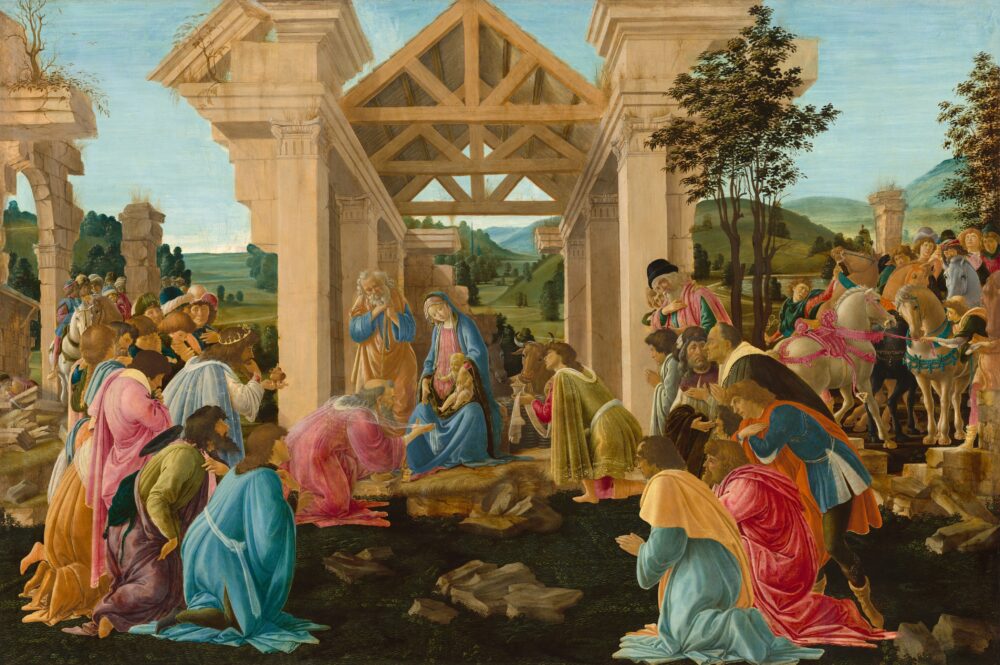
How Renaissance Art Rewrote Christian Doctrine
For most of Christian history, ordinary believers did not own personal copies of Scripture. Many could not read, and their understanding of biblical events came primarily through sermons, stained-glass windows, frescoes, icons, sculptures, illuminated manuscripts, and paintings. Art became the visual Bible of Christendom.
This was not inherently negative. Art preserved stories, inspired worship, and communicated theological ideas to generations who might never read a biblical manuscript. Yet visual storytelling possesses extraordinary power. Over time, artistic traditions sometimes went beyond the biblical text. Images became assumptions, assumptions became traditions, and traditions eventually became accepted doctrine.
The following examples reveal how medieval and Renaissance art shaped popular Christian belief, often blurring the distinction between Scripture and imagination.
1. Fat Little Baby Angels (Putti)
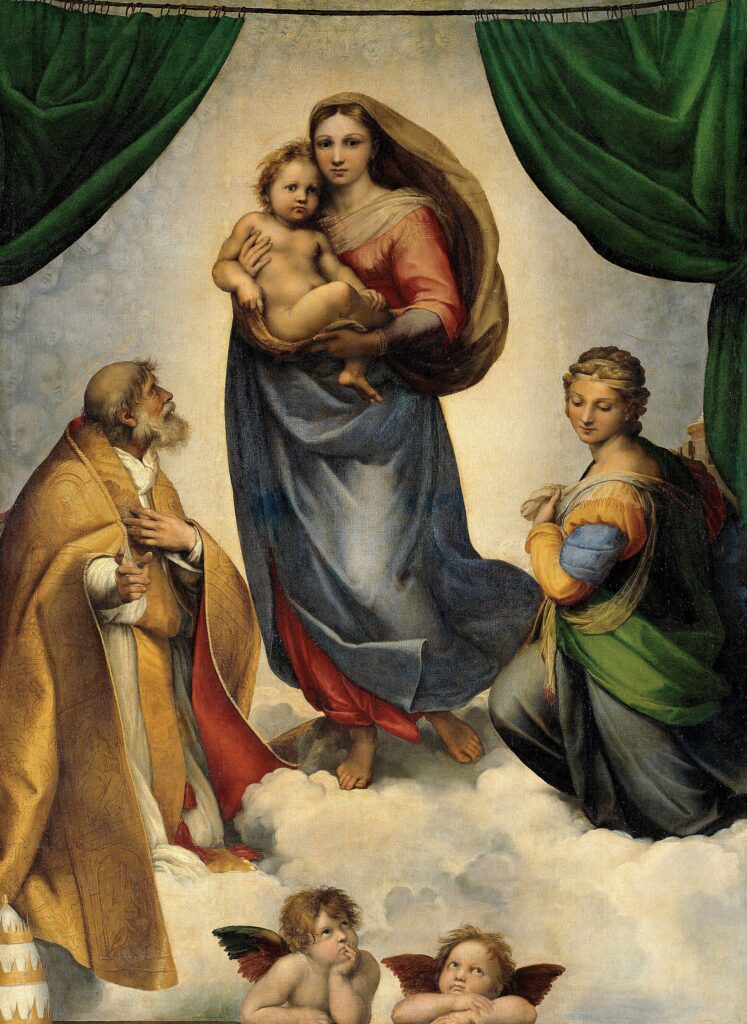
Example Artwork: Raphael’s Sistine Madonna (Cherubs)
Over time, the image of powerful heavenly messengers was replaced by harmless winged babies. For many Christians, Renaissance cherubs became more recognizable than the angels described in Scripture.
The Biblical Narrative
Biblical angels are never portrayed as winged infants. Angels appear as mighty messengers, warriors, guardians, and servants of God. Encounters with angels frequently provoke fear and astonishment. The cherubim and seraphim associated with God’s throne are awe-inspiring heavenly beings whose appearance bears little resemblance to modern greeting-card imagery.
Medieval Distortion
During the Renaissance, artists borrowed heavily from Greco-Roman art. The playful winged infants known as putti originated as representations of Cupid, Eros, and other classical figures. These decorative motifs eventually migrated into Christian artwork and became associated with angels.
2. The White European Jesus

Example Artwork: Leonardo da Vinci’s The Last Supper
European artists naturally portrayed biblical figures using familiar local features. Over centuries, however, these artistic interpretations became so dominant that many Christians unconsciously accepted a European Jesus as historical reality rather than artistic adaptation.
The Biblical Narrative
Jesus was a first-century Jewish man from Judea, born into the house of David and raised within Jewish culture. The Gospels present Him as Israel’s Messiah, fulfilling promises made to Abraham, Isaac, Jacob, and David. His life and ministry are inseparable from the story of Israel.
Medieval Distortion
European artists naturally portrayed biblical figures using familiar local features. Over centuries, however, these artistic interpretations became so dominant that many Christians unconsciously accepted a European Jesus as historical reality rather than artistic adaptation.
This visual transformation coincided with the rise of Replacement Theology (Supersessionism), the belief that the Church had permanently replaced Israel in God’s redemptive purposes. As Christ became visually detached from His Jewish identity, many believers gradually lost sight of the fact that Christianity emerged from a thoroughly Jewish context.
The issue is not that different cultures depict Jesus in their own likeness. African, Asian, Middle Eastern, and European Christians have all done so. The concern arises when artistic traditions obscure the historical reality of Jesus and disconnect Him from the covenants, promises, and people through whom God’s plan of redemption unfolded.
3. The Three Kings and the Nativity Timeline
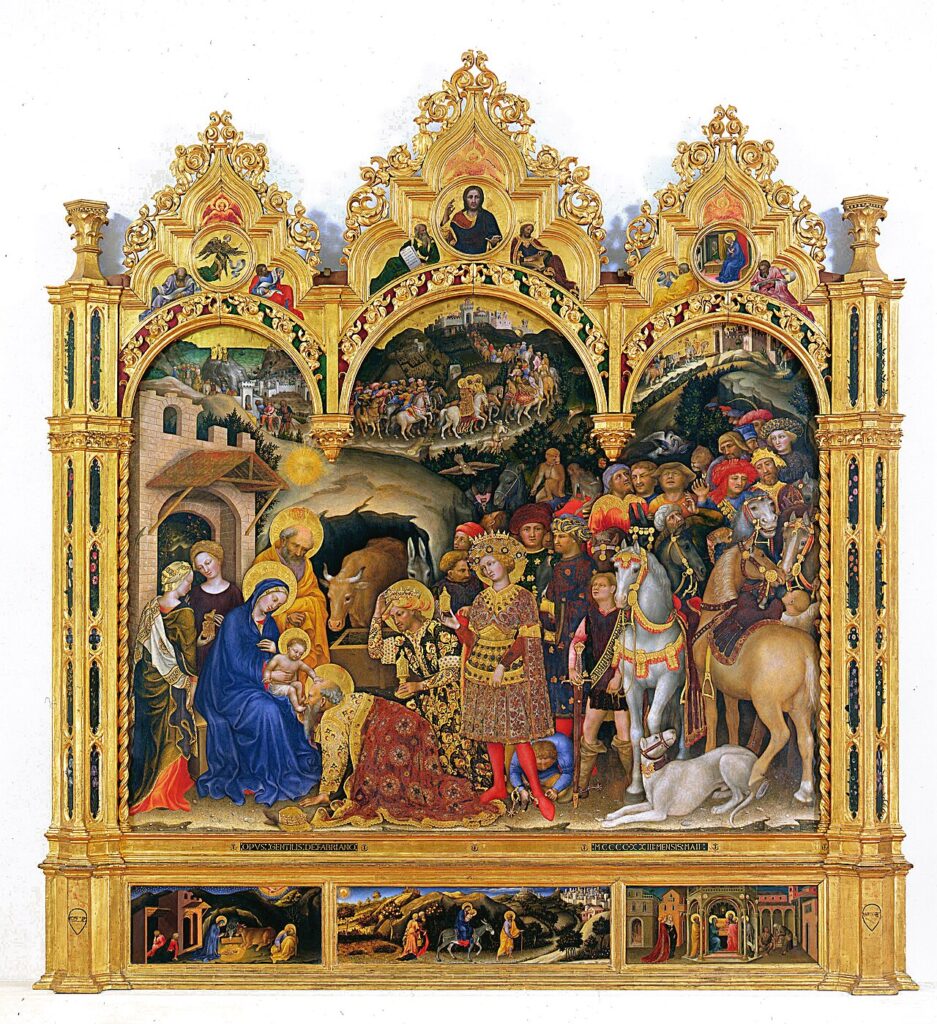
Example Artwork: Gentile da Fabriano’s Adoration of the Magi
Medieval nativity scenes compressed multiple events into a single moment. Shepherds, angels, wise men, and stable animals were gathered around the newborn Christ. The Magi became kings, their number was fixed at three, and the timeline was condensed into a single Christmas-night scene.
The Biblical Narrative
The Bible never states there were three wise men. Matthew merely records three gifts: gold, frankincense, and myrrh. Furthermore, the Magi appear to have arrived sometime after Jesus’ birth, finding Him in a house rather than at the manger.
Medieval Distortion
Medieval nativity scenes compressed multiple events into a single moment. Shepherds, angels, wise men, and stable animals were gathered around the newborn Christ. The Magi became kings, their number was fixed at three, and the timeline was condensed into a single Christmas-night scene.
The resulting image became so familiar that many believers assume it comes directly from Scripture.
4. Hell, the Devil, and Dante’s Inferno
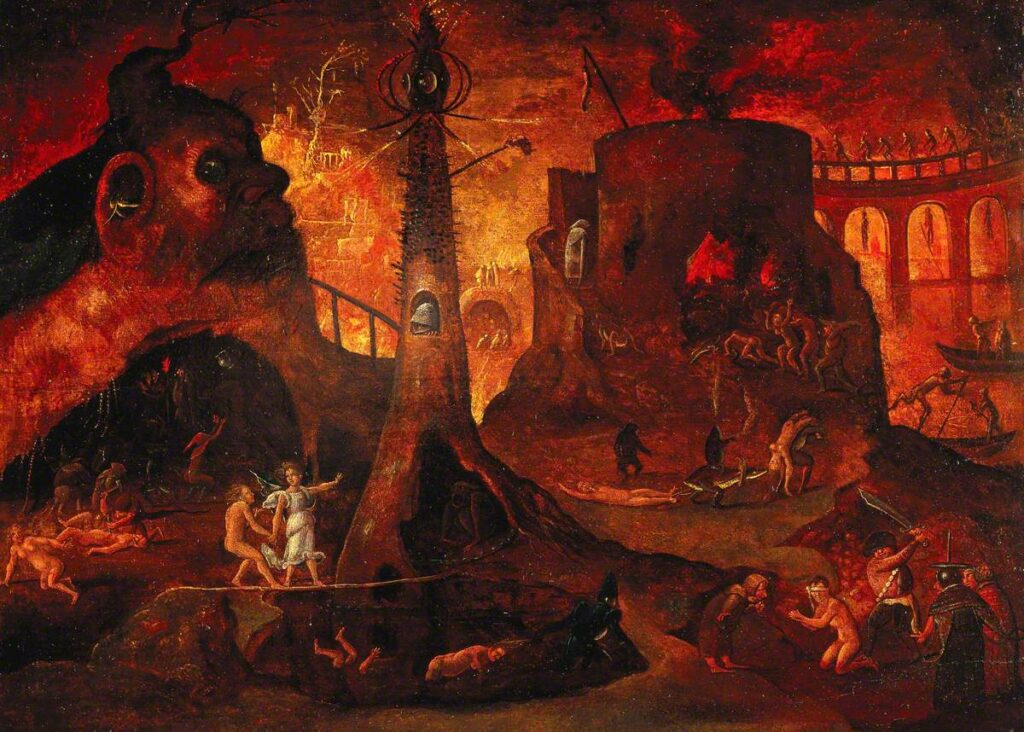
Example Artwork: Hieronymus Bosch An Angel Leading a Sould to Hell
Demons became prison guards. Satan became the ruler of an infernal kingdom. Vast caverns of punishment were populated with creatures and torments drawn as much from imagination and mythology as from Scripture.
The Biblical Narrative
The English word “Hell” often combines several distinct biblical concepts into one. Most notably, Jesus frequently used the word Gehenna, a Greek transliteration of the Hebrew Ge Hinnom—the Valley of Hinnom, a real location south of Jerusalem associated with judgment and destruction.
Jesus employed Gehenna as a powerful warning concerning divine judgment. Yet He never described it as Satan’s kingdom, nor did He portray Satan as ruling over it. Instead, Scripture presents Satan himself as destined for judgment.
The New Testament also uses terms such as Hades, Tartarus, and the Lake of Fire. Each carries its own context and meaning, but over time they became merged into a single concept called “Hell.”
Medieval Distortion
While not a painting, Dante Alighieri’s 14th-century epic poem The Divine Comedy (Inferno) completely codified how the Western world envisions Hell. Dante structured Hell into nine concentric circles, each featuring highly specific, ironic tortures for specific sins (e.g., flatterers submerged in excrement, thieves bitten by snakes). Renaissance painters like Sandro Botticelli and Hieronymus Bosch were so inspired by Dante’s vivid, non-biblical descriptions that they painted them onto church walls. Over time, Christians forgot that these fictional nine circles came from a political Italian poet rather than the Bible.
Demons became prison guards. Satan became the ruler of an infernal kingdom. Vast caverns of punishment were populated with creatures and torments drawn as much from imagination and mythology as from Scripture.
5. Heaven and Hell as Immediate Eternal Destinations
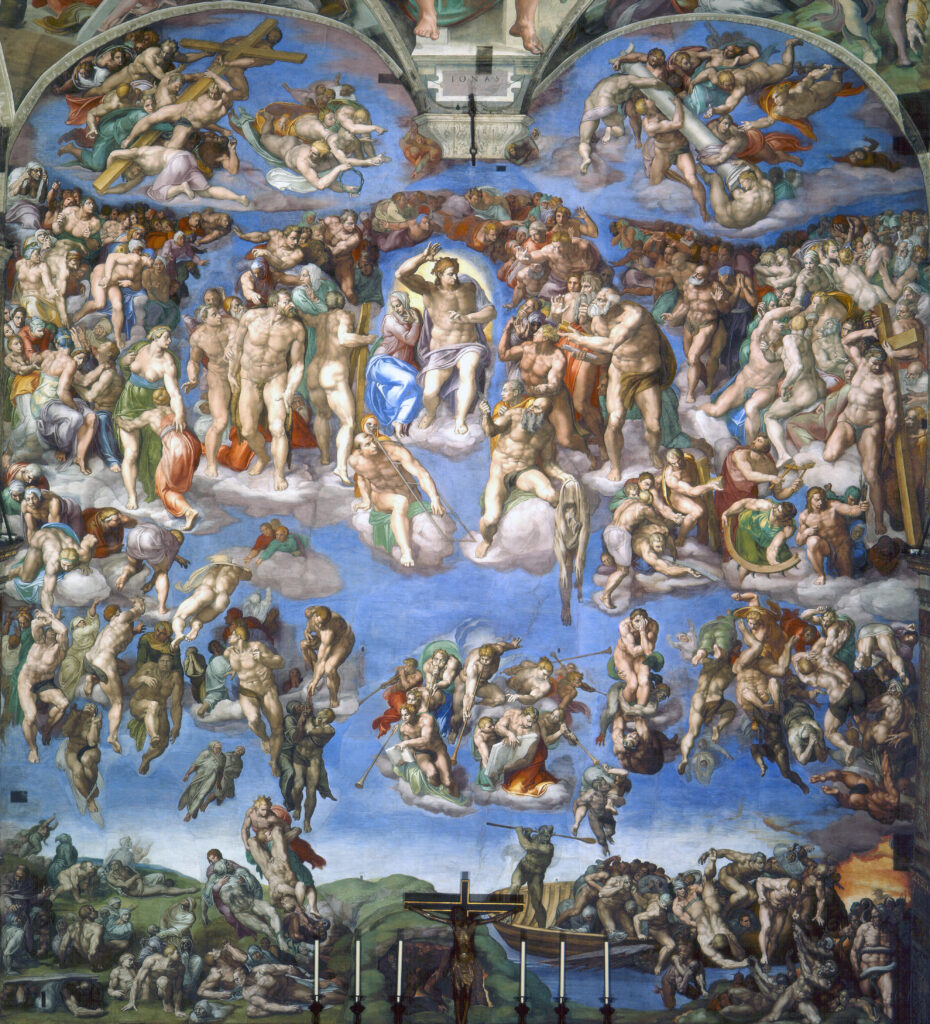
Example Artwork: Michelangelo’s The Last Judgment
This simplified visual aid became deeply embedded in the cultural imagination. Today, pop culture completely relies on this medieval imagery, constantly repeating the trope of a clipboard-wielding Saint Peter screening candidates at the Pearly Gates.
The Biblical Narrative
The New Testament outlines a sweeping cosmic drama centered around physical restoration rather than a swift, permanent escape from reality. Throughout scripture, the primary emphasis is placed on bodily resurrection, a final judgment, and a literal renewal of creation. The ultimate inheritance of humanity is not an escape from earth into the clouds, but participation in a physical, renewed creation. The Book of Revelation describes the New Jerusalem descending down from heaven, allowing God to dwell directly among His people.
To support the idea of an immediate, permanent move to a heavenly realm, popular tradition frequently misuses the scriptural phrase “absent from the body, present with Christ” (from 2 Corinthians 5:8). This line is routinely brandished as a proof-text for an instant arrival at our eternal home. However, looking at the source text reveals that this is a major misreading:
- An Intermediate State: Paul is describing a temporary, intermediate reality—a comfort-filled holding pattern for the spirit between a believer’s death and the final resurrection, not the final arrival.
- The Desire to be Re-clothed: Just a few verses earlier (2 Corinthians 5:4), Paul explicitly states that he does not want to be “unclothed” (a disembodied spirit in heaven). Instead, he longs to be “further clothed”—meaning he is eagerly waiting to receive his physical, resurrected body.
By isolating verse 8, human traditions ignore the fact that the ultimate home promised to humanity is a physically resurrected life within a renewed, restored creation. This source text presents an infinite, beautifully complex narrative of life, rebirth, and restoration, rather than a simplistic exit strategy. Know more
Medieval Distortion
The distortion occurred when human artists attempted to condense this massive, multi-dimensional story into simple visual shortcuts. Anxious to map out the afterlife, medieval theologians and painters flattened the scriptural narrative into two immediate, static, and permanent destinations: a heaven strictly above and a hell strictly below. They filled canvases with imagery of souls lining up at celestial gates, waiting for Saint Peter to check their credentials against a ledger.
This simplified visual aid became deeply embedded in the cultural imagination. Today, pop culture completely relies on this medieval imagery, constantly repeating the trope of a clipboard-wielding Saint Peter screening candidates at the Pearly Gates. While these scenes are visually compelling, they completely bypass the actual biblical focus on physical resurrection and the renewal of our planet. By trapping the narrative inside a cloud-bound caricature, human visual aids traded a profound, restored world for a disembodied, static concept of eternity.
6. The Forbidden Fruit Became an Apple
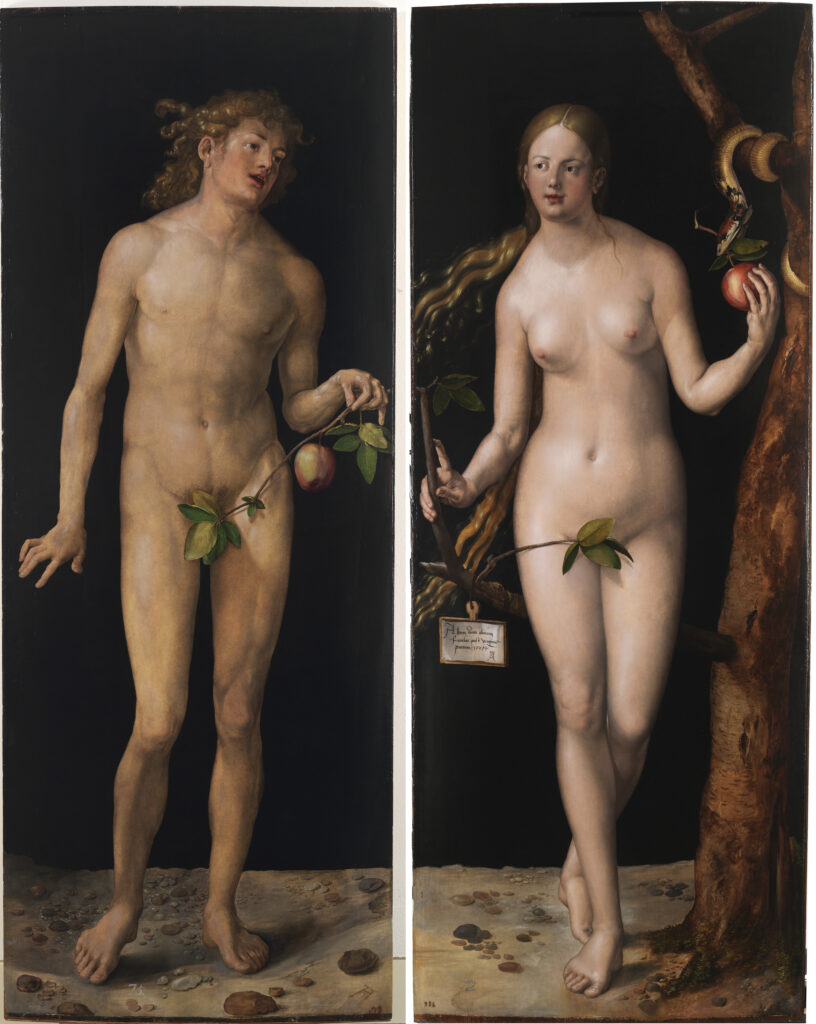
Example Artwork: Albrecht Dürer’s Adam and Eve
Eventually the apple became so deeply associated with the Eden narrative that many people are surprised to discover the Bible never mentions one.
The Biblical Narrative
Genesis never identifies the fruit eaten by Adam and Eve. Scripture simply refers to “the fruit of the tree of the knowledge of good and evil.”
Medieval Distortion
Western artists increasingly portrayed the fruit as an apple, possibly influenced by a Latin wordplay between malum (evil) and malum (apple). Whether intentional or not, the image spread rapidly through Christian art.
Eventually the apple became so deeply associated with the Eden narrative that many people are surprised to discover the Bible never mentions one.
7. The Visual Deification of Saints and Relics
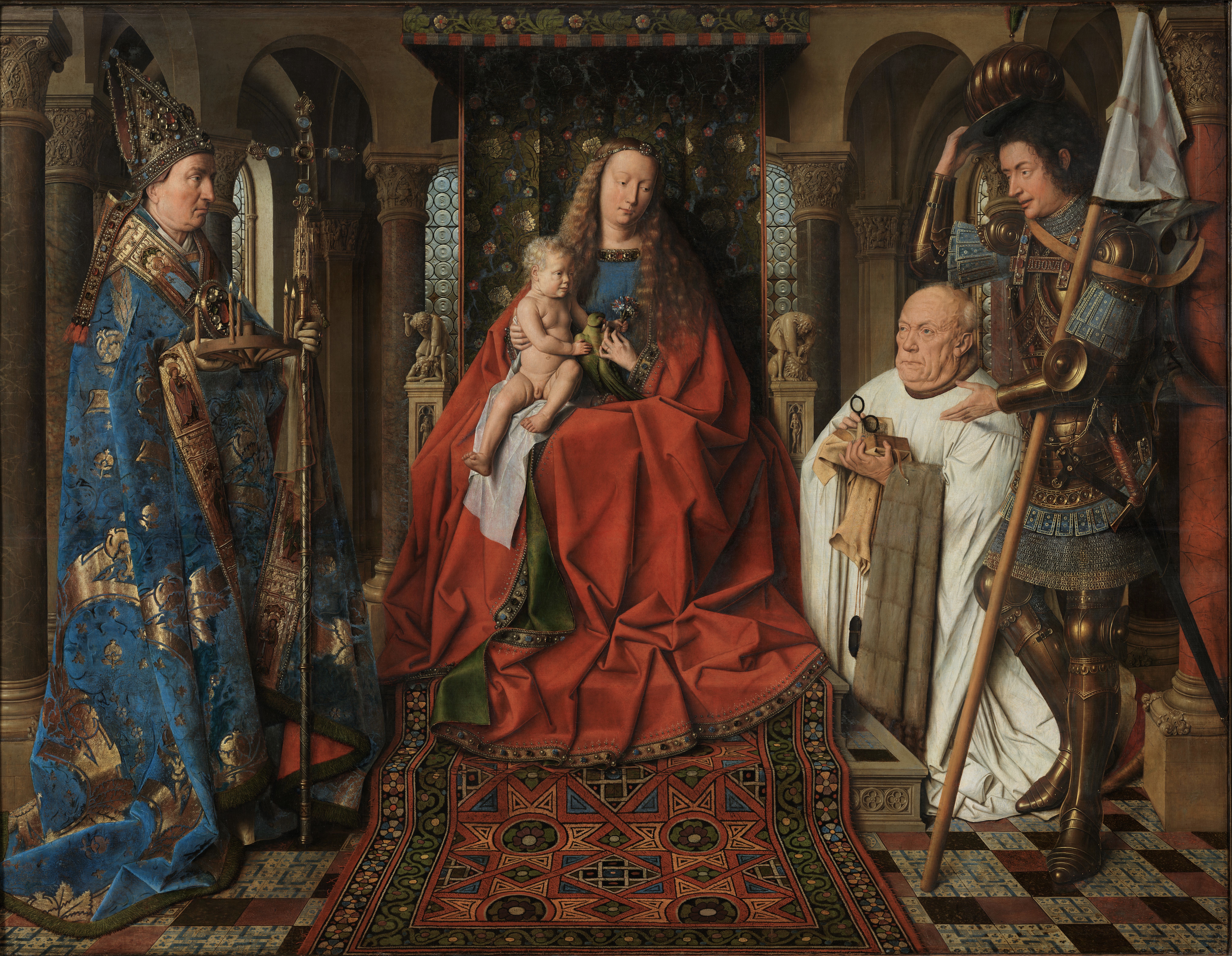
Example Artwork: Jan van Eyck’s The Virgin and Canon van der Paele
As saint veneration expanded, artists increasingly portrayed saints with heavenly radiance, divine authority, and supernatural status. Relics became objects of pilgrimage and were often believed to mediate blessing, protection, or miraculous power.
The Biblical Narrative
Scripture honors faithful believers but directs worship toward God alone. The apostles never instructed Christians to seek spiritual power through relics, bones, or physical remains.
Medieval Distortion
As saint veneration expanded, artists increasingly portrayed saints with heavenly radiance, divine authority, and supernatural status. Relics became objects of pilgrimage and were often believed to mediate blessing, protection, or miraculous power.
Although intended to honor exemplary believers, artistic representations frequently blurred the distinction between remembrance and reverence, elevating saints in the minds of ordinary worshippers.
8. The Good vs. Evil Cosmic Balance
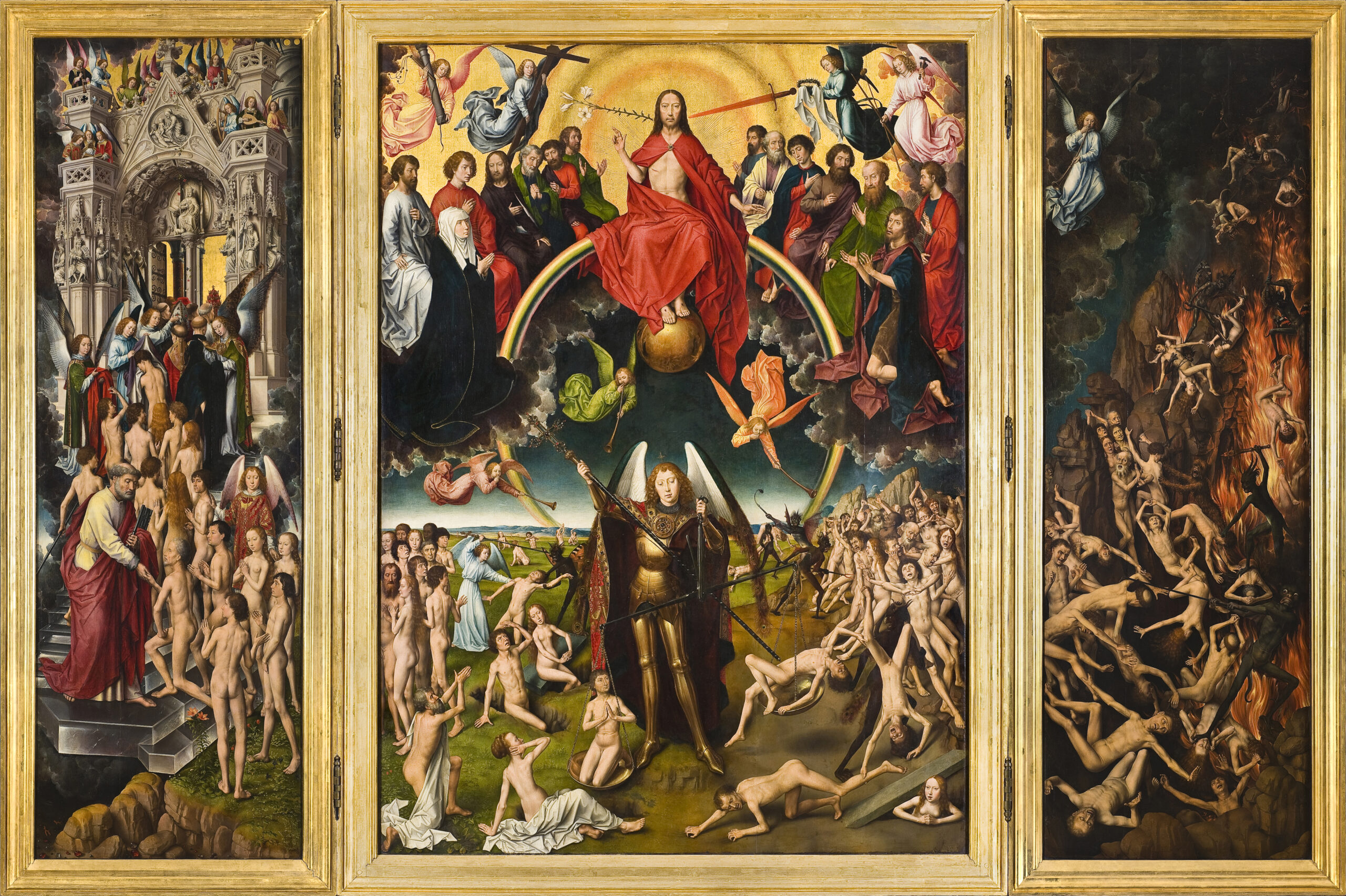
Example Artwork: Hans Memling’s The Last Judgment
This artistic framework resembled older pagan and philosophical systems more than biblical theology, subtly teaching generations that good and evil existed as competing cosmic equals.
The Biblical Narrative
Scripture never portrays God and Satan as equal opposing forces. Satan is a created being whose authority remains subject to God’s sovereignty.
The biblical narrative is not a struggle between two equally matched powers but the unfolding of God’s ultimate victory over rebellion and evil.
Medieval Distortion
Many medieval works depicted heaven and hell as rival kingdoms locked in perpetual conflict. Armies of angels and demons appeared almost evenly matched, creating a visual form of dualism.
This artistic framework resembled older pagan and philosophical systems more than biblical theology, subtly teaching generations that good and evil existed as competing cosmic equals.
9. The Graphic Anatomy of Satan
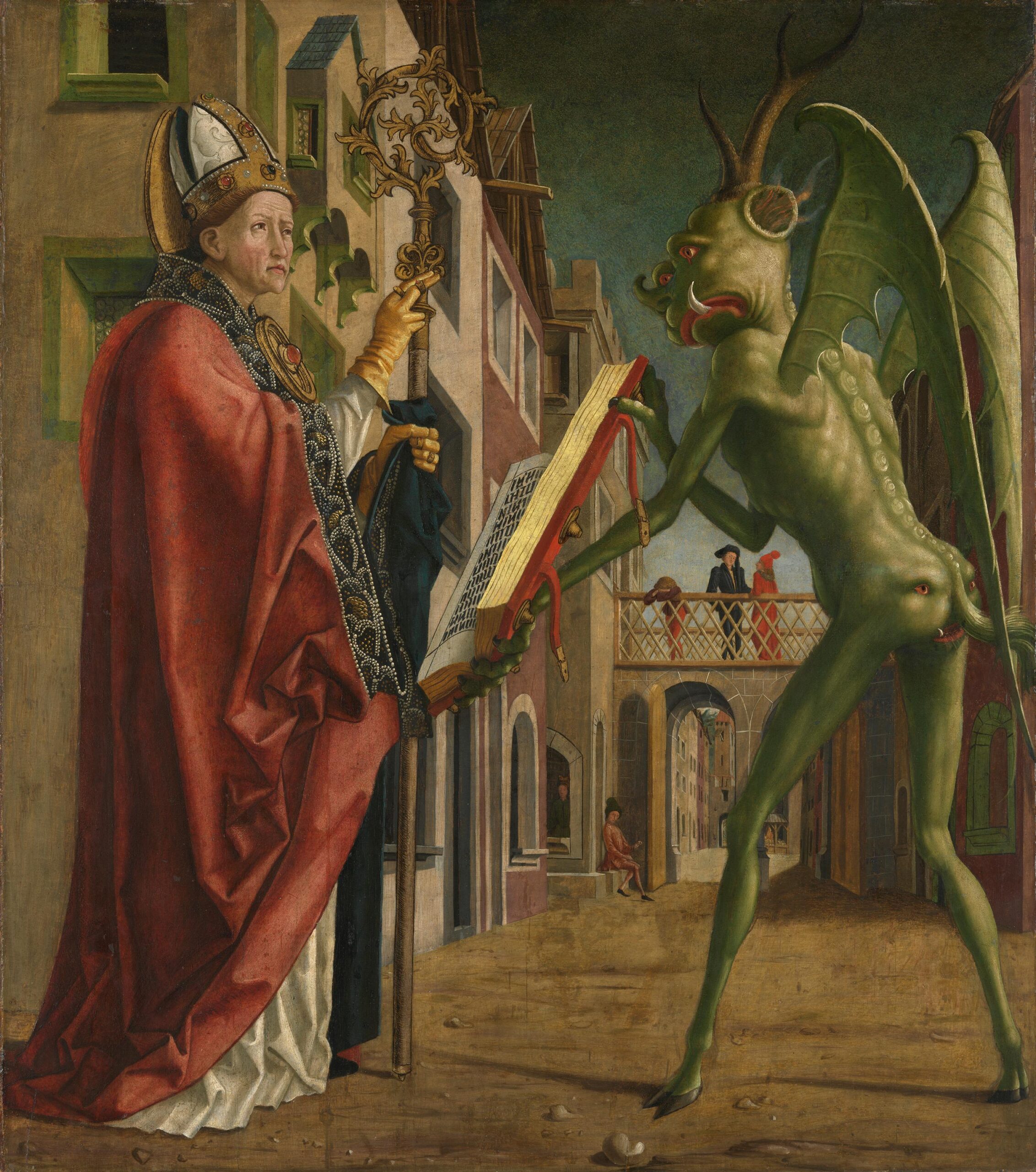
Example Artwork: Michael Pacher The Devil Presenting St. Augustine with the Book of Vices
Unable to sit with the abstract, symbolic descriptions of scripture, medieval and Renaissance artists began constructing a graphic anatomy for the devil. To do this, they did not rely on the Bible; they pillaged ancient folklore. Painters and sculptors borrowed physical features from pagan gods, satyrs, Pan, and mythological beasts, combining them to create a terrifying mashup.
The Biblical Narrative
The Bible never provides a definitive physical portrait or an anatomical blueprint of Satan. Instead of a concrete caricature, the scriptural narrative employs fluid, functional symbols to describe the nature of evil. We encounter terms like serpent, dragon, deceiver, adversary, and accuser. These descriptions are not physical measurements; they are relational warnings about how evil operates.
The source text purposefully leaves the literal anatomy of the adversary unwritten, keeping our focus on the spiritual reality rather than a physical monster.
Medieval Distortion
The distortion occurred when humans demanded a literal visual aid for evil. Unable to sit with the abstract, symbolic descriptions of scripture, medieval and Renaissance artists began constructing a graphic anatomy for the devil. To do this, they did not rely on the Bible; they pillaged ancient folklore. Painters and sculptors borrowed physical features from pagan gods, satyrs, Pan, and mythological beasts, combining them to create a terrifying mashup.
Suddenly, horns, goat hooves, claws, bat wings, tails, and grotesque red skin became the standard visual vocabulary for evil. While these vivid images were highly effective tools for scaring medieval churchgoers into submission, they completely warped our only source of description.
Over time, this artistic caricature became far more familiar than the actual biblical text. Today, popular culture completely relies on this Renaissance cartoon. By turning a profound, insidious spiritual reality into a pitchfork-wielding red monster, human visual aids trivialized the very concept of evil. They taught generations to look out for a goat-legged beast, causing them to completely miss the subtle, deceptive adversary described in the pages of scripture.
10. The Geometry of the Trinity
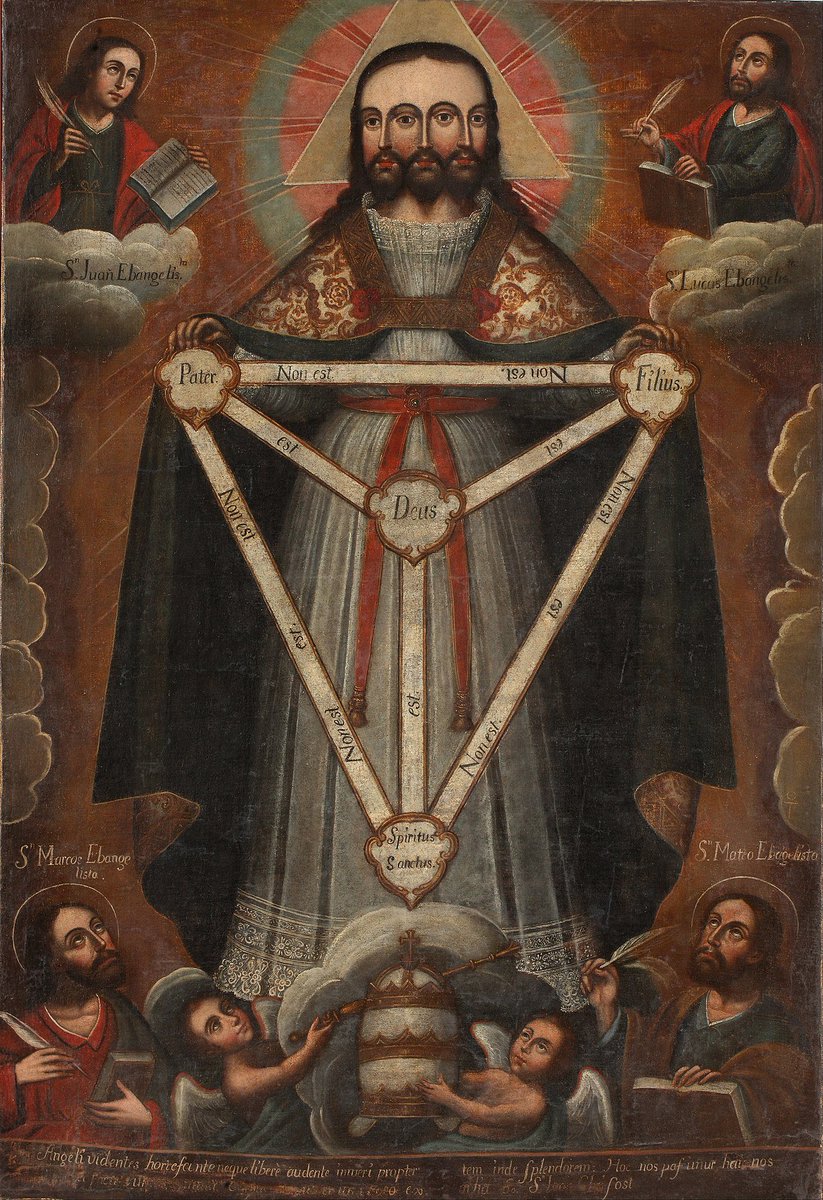
Example Artwork: The Scutum Fidei (Shield of the Trinity)
Ultimately, the biblical narrative does not ask us to intellectually decode God’s inner dimensions or define Him as three distinct persons. It asks us to love Him and serve Him. True devotion is found in that relational love, not in human-made geometry.
The Biblical Narrative
The Bible serves as our primary source of description for the Divine, revealing a God who is inherently multi-dimensional, unsearchable, and completely undefinable. Throughout the scriptural narrative, we encounter different expressions of this infinite reality—the Father, the Son, and the Holy Spirit. However, the text itself never constructs a formal “Trinity” or forces God into a rigid, three-person formula. Instead, the Bible uses relational descriptions to help our finite minds connect with a limitless Creator.
These scriptural descriptions are like grains of food dropped down to an ant. They are simple, merciful points of contact designed to help us taste and see that He is good. They are not meant to be a complete blueprint of the New York Stock Exchange. The biblical narrative leaves the inner mechanics of God open, inviting us into a mystery that transcends human logic.
Medieval Distortion
Centuries later, medieval theologians and artists moved away from this open, scriptural mystery. They began using Greek philosophy and rigid geometric symbols—such as triangles, trefoils, and the Scutum Fidei (Shield of the Trinity)—to force the biblical narrative into a tidy mathematical box.
While these diagrams were meant to be educational tools, they reduced a profound, living mystery into a simplified formula. They traded an undefinable Creator for a three-sided diagram. The man-made symbol became more familiar than the infinite God of scripture, causing people to mistake the “grain of food” for the entire reality.
Ultimately, the biblical narrative does not ask us to intellectually decode God’s inner dimensions or define Him as three distinct persons. It asks us to love Him and serve Him. True devotion is found in that relational love, not in human-made geometry.
11. The Halo Effect: When Holiness Became a Circle
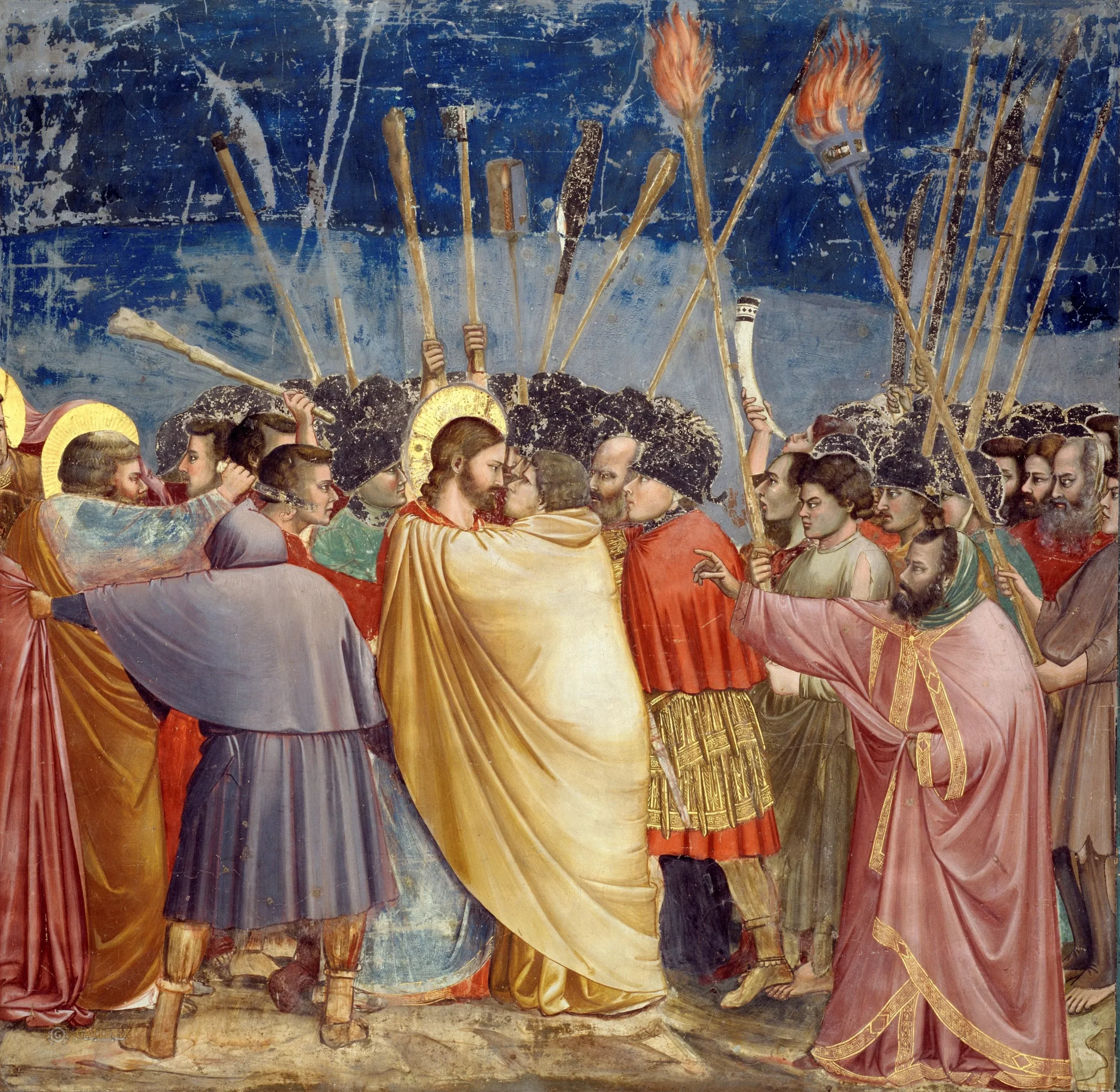
Example Artwork: Giotto di Bondone The Kiss of Judas

The halo predates Christianity. Ancient Egyptian, Greek, Roman, and imperial artwork used radiant circles to signify divinity, power, or heavenly status. Christian artists adopted the symbol to identify Christ, angels, apostles, martyrs, and saints.
The Biblical Narrative
Scripture occasionally describes divine glory, radiant faces, and heavenly brilliance. However, no biblical figure is described as permanently walking around with a golden disc behind their head.
Medieval Distortion
The halo predates Christianity. Ancient Egyptian, Greek, Roman, and imperial artwork used radiant circles to signify divinity, power, or heavenly status. Christian artists adopted the symbol to identify Christ, angels, apostles, martyrs, and saints.
Eventually the halo became one of the most recognizable symbols in Christian art. So complete was its adoption that many believers assumed it originated in Scripture itself.
The halo serves as a powerful example of how pre-existing visual symbols were absorbed into Christian art and transformed into markers of holiness.
Conclusion
Christian art remains one of humanity’s greatest cultural treasures. It preserved biblical narratives, inspired devotion, and communicated theological truths across generations.
Yet art is never neutral. Images shape imagination, and imagination often shapes belief. Medieval artists often filled gaps left by Scripture, creating visual traditions that eventually became accepted as biblical fact.
Perhaps the most significant shift produced by medieval religious art was not merely changing how Christians imagined biblical events, but changing how they understood the story itself—from the identity of Jesus and the nature of angels to the meaning of Gehenna, the role of Satan, and the destiny of the redeemed.
The challenge for modern believers is not to reject sacred art but to distinguish between biblical revelation and artistic interpretation. When we return to the biblical text itself, we often discover that some of Christianity’s most familiar images owe more to medieval paintbrushes than to Scripture.
Art can illuminate truth, but it can also quietly rewrite it.